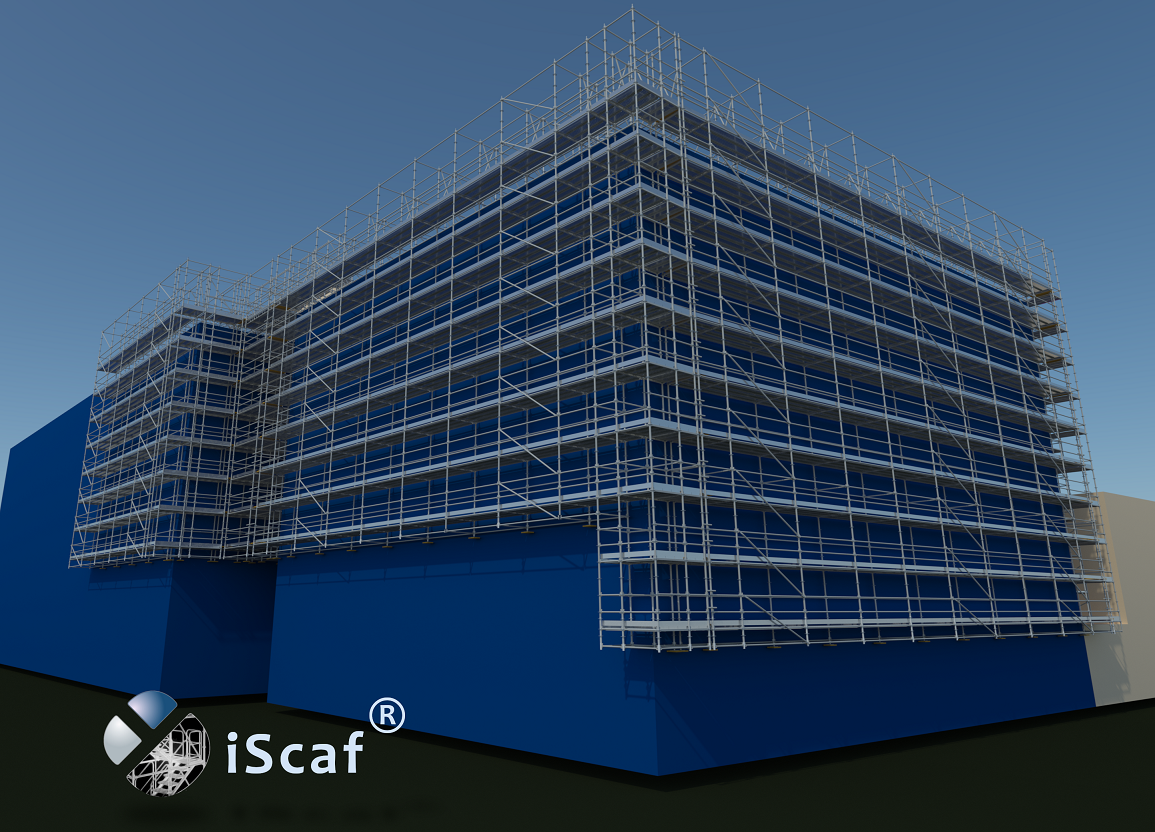
“iScaf® 11.0” is the latest version of the most respected scaffold design and estimating system available. Now with 3D solid rendering, iScaf® will enable you to design scaffold plans with full side elevations, and detailed 3D Drawings of your scaffold. iScaf® will generate an accurate bill of materials quickly and automatically with totals including length, weights and area. iScaf® will help save time and help you win more business with the impressive presentations produced by the latest release. iScaf® can be integrated with the iRent® system modules.
There have been many new exciting developments recently with iScaf®. Please review our Latest News page to keep updated with new developments and new products that integrate with iScaf®.
iScaf® RealView is a new service available from Scaffolding Software that will allow you to create an interactive 3D scaffold experience.
Please contact us for more information.
Visit our iScaf® RealView page.
Yes. Version 11.0 provides access to the best of both worlds. In addition to the standard menu controls, it makes available the latest interface, including a new ribbon menu. This gives you access to all the controls necessary for drawing scaffold; even more quickly and easily than before. No matter whether you are a scaffold expert (with limited computer experience) or a CAD expert (with many of your own custom templates and blocks), our software is there to provide the power at your fingertips.
iScaf® is a fully self-contained software system that can be downloaded and deployed on Microsoft Windows PC or Cloud systems.
Behind the scenes, iScaf® uses the powerful AutoCAD drawing engine to draw and estimate scaffold. Our product can still be used effectively by all users, though, even those without any CAD knowledge. Due to a bulk licensing agreement, we are now able to offer an even more affordable pricing structure. There is no need to purchase AutoCAD or any additional CAD software to use the iScaf® product.
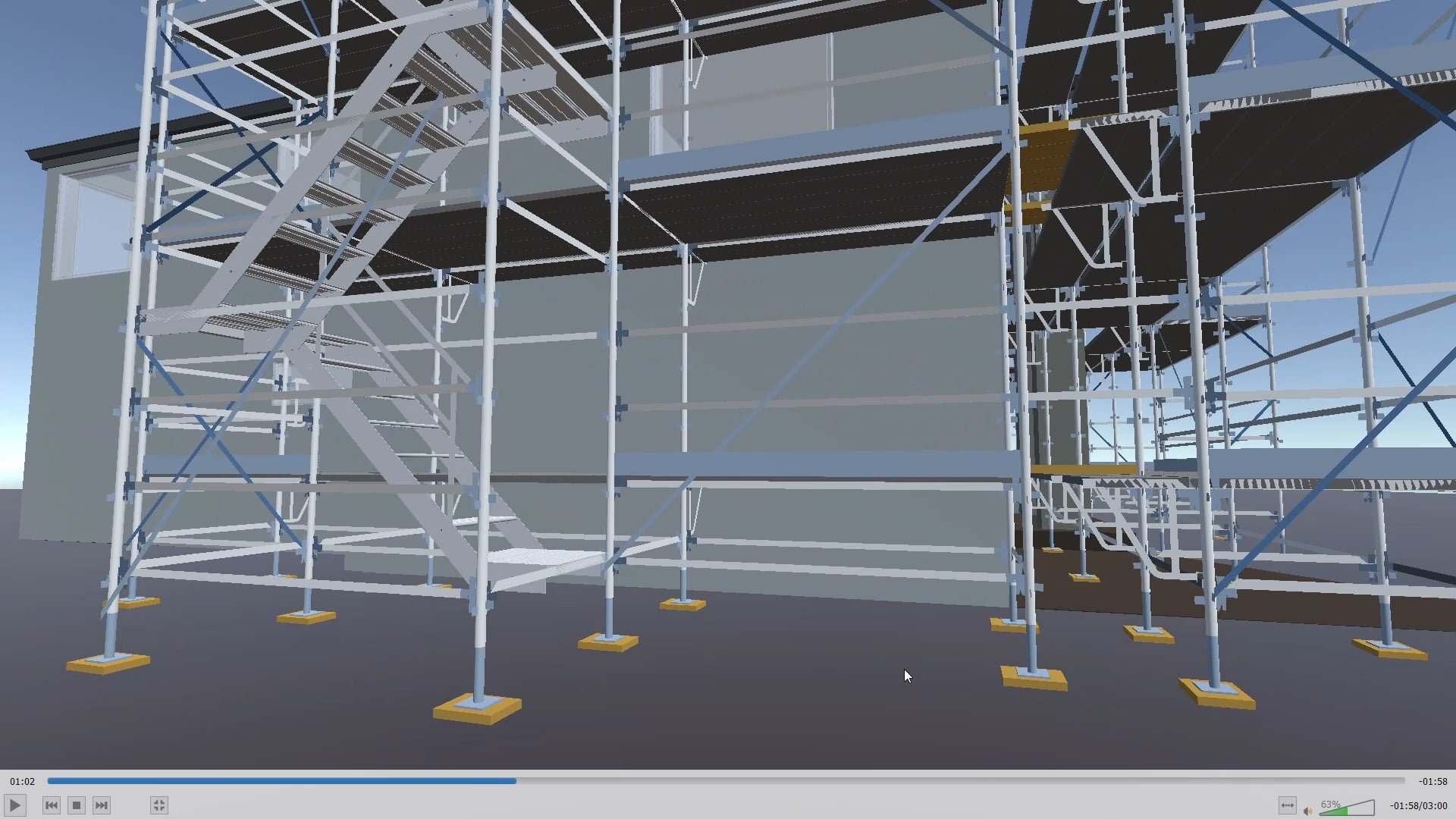
Please click on the image to view the latest iScaf® demonstration.
Some Existing iScaf® Modules: Layher Generic, Plettac Generic, Ringlock Generic, Cuplock Generic, Kwikstage Generic, Basic Formwork, Basic Shoring, USA Excel Modular Scaffold, USA Frames (all styles), USA K-Lock, USA Safway Modular System, USA Safway Frames, USA Wedgelock, USA AT-PAC style, USA Layher (Imperial), Canada Etobicoke Ironworks style, Australia – AT-PAC, Australia – ACROW, Australia – Frames (Western Australia), Australia – KwikStage, Australia – Cuplok, Australia – Layher (Metric) U-Deck and O-Deck, Australia – Quickally, Australia – Aluminum Kwikstage, Australia – SafeSmart Access ProScaff U-Deck and O-Deck, New Zealand – Layher (Metric) U-Deck and O-Deck, New Zealand – Kwikstage, New Zealand – SafeSmart Access ProScaff U-Deck and O-Deck, New Zealand – Aluminium Kwikstage, England/Ireland/Scotland – Kwikstage, England/Ireland/Scotland – Cuplok, Germany – Plettac Perfect Contour, Germany – Plettac SL Frames, Germany – Plettac SL70 Frames, Germany – Plettac S System, Germany – Layher Allround, Germany – Layher Speedyscaf, Holland – Crab 32, Italy – Multidirectional System, Italy – SM8, Italy – Realpont, Italy – Pilosio Frames, Italy – Rapid Scaf, Portugal – Nor48, Portugal – Adapt, Sweden – Layher, Poland – Layher.
iScaf® does not build scaffold entirely out of tube and clip.
We do allow tube and clip in between bays for system scaffold like tube ties, tube handrail or tube for wall ties.
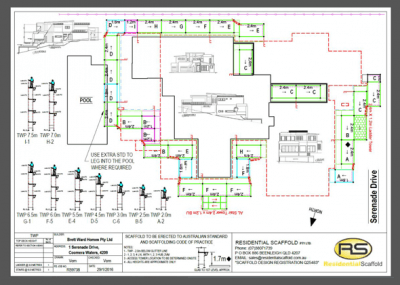
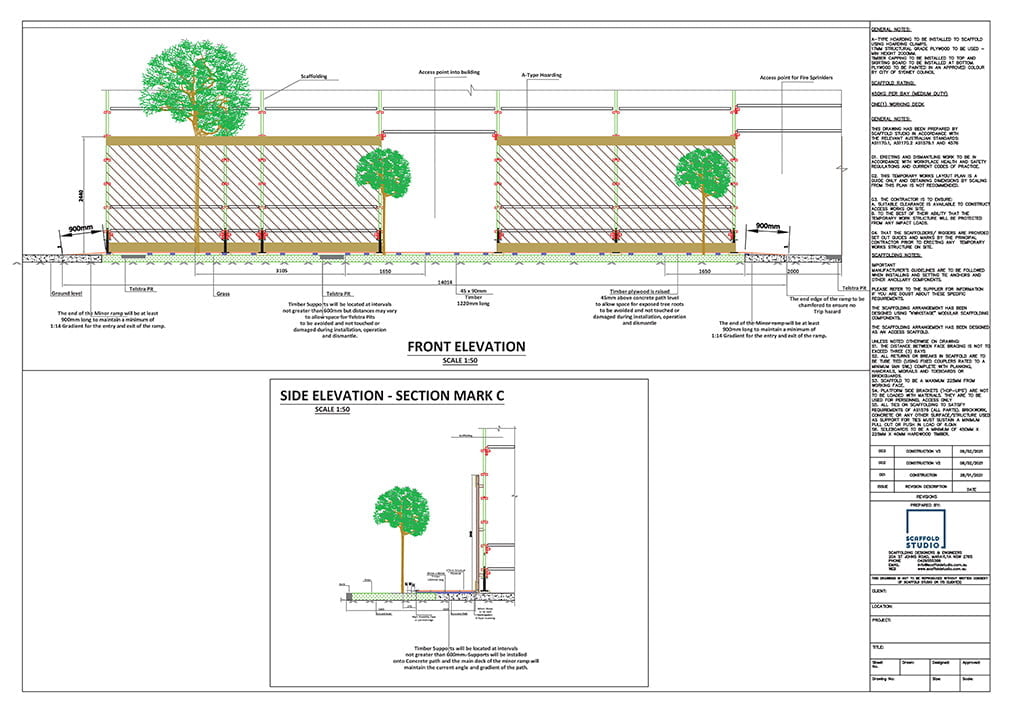
“iScaf®” allows you to provide detailed Plan, Elevation and 3D colour drawings with your estimates and quotes. The output is perfect for scaffolders on-site, providing them with the assurance that they know exactly what is required to build. It is also a perfect demonstration tool, allowing you to show your clients just what you can do for them. “iScaf®” allows you to scaffold using an architectural drawing of any structure you choose. Import the image in PDF or scanned format and trace around the outline.
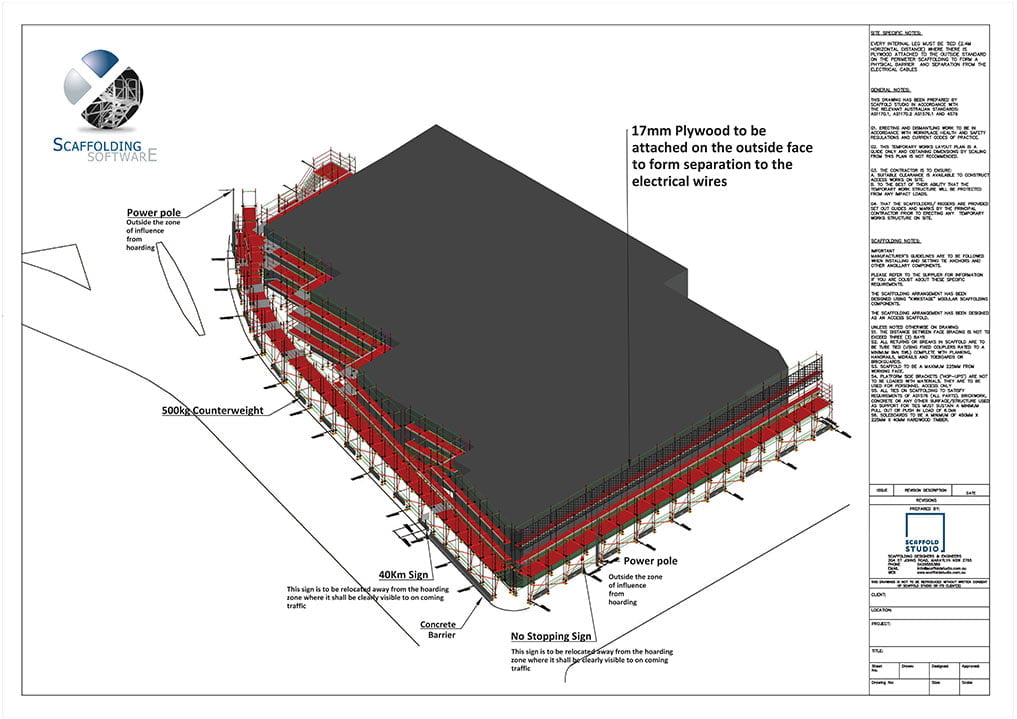
Print your full design on any standard size paper, with your choice of: company logo; additional text and extra information about your company. Our product also allows you to easily scale drawings using 1:100, 1:200 or any other ratio you may prefer. By presenting your drawing in this way, “iScaf®” allows you, your clients, and your scaffolders to clearly understand what is required when it’s time to actually build the scaffold on site.
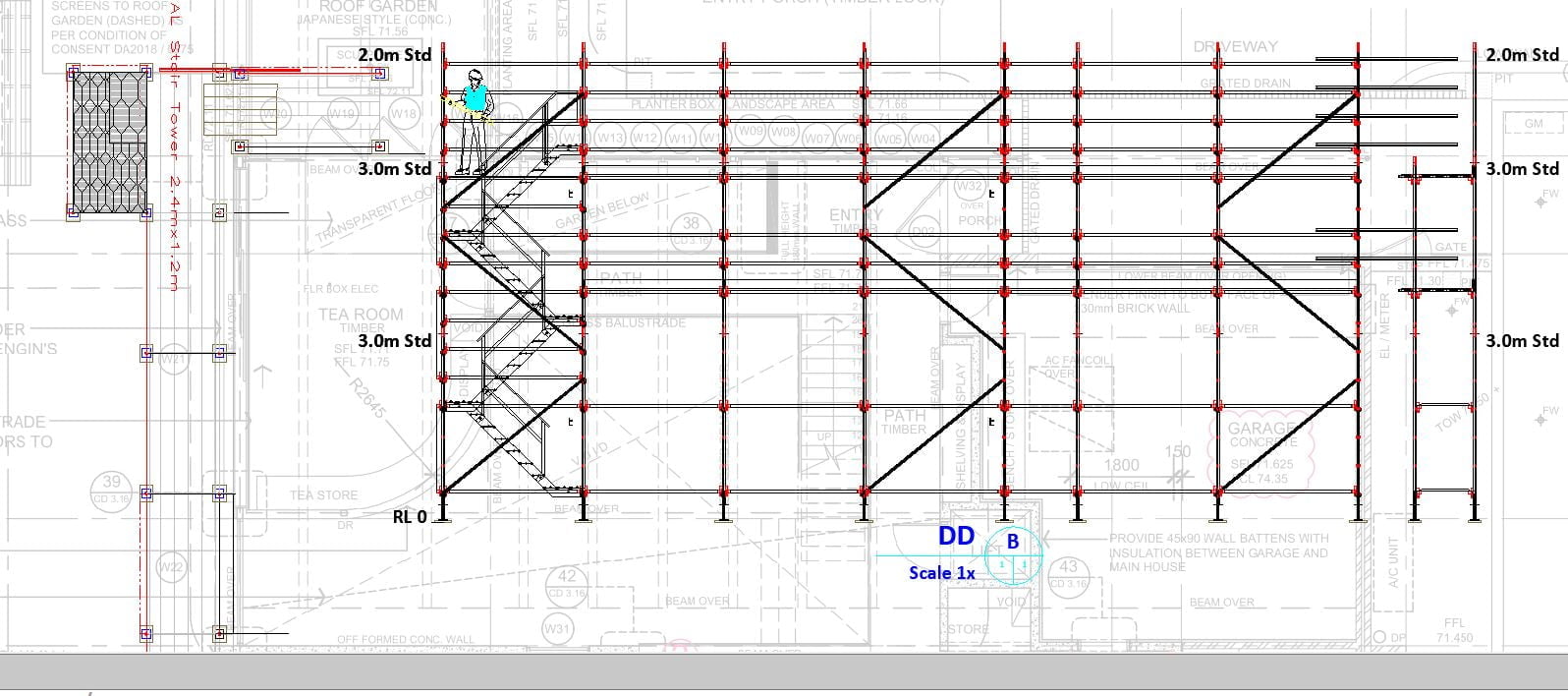
Some other products used for creating scaffolding includes functions for creating three dimensional representations of a scaffolding design. “iScaf®” is no exception in this regard. It not only generates professional 3D drawings but also goes the extra distance of allowing you to produce sectional/elevation constructions These offer the advantage of providing an unimpeded view of the standards (verticals) layout and can be customised to include your own company title block.
iScaf® is used extensively in the field with THOUSANDS of drawings delivered every week by our clients in practical real world situations. While other systems may grind to a halt with more than 50 scaffold bays, iScaf® can handle extremely large real world commercial projects and complex designs which can be edited as requirements and conditions may change on site. iScaf® is only limited by your own creativity.
iScaf®11 Gallery
Feel free to contact one of our official customer reference sites. Customer reference sites.
We also have an additional parts library which can used to enhance your design or you can design your own components and blocks to customise your design and annotate you presentations.
“iScaf®” Supports many types of modular or frame scaffold systems and can also be customised to suit special needs.
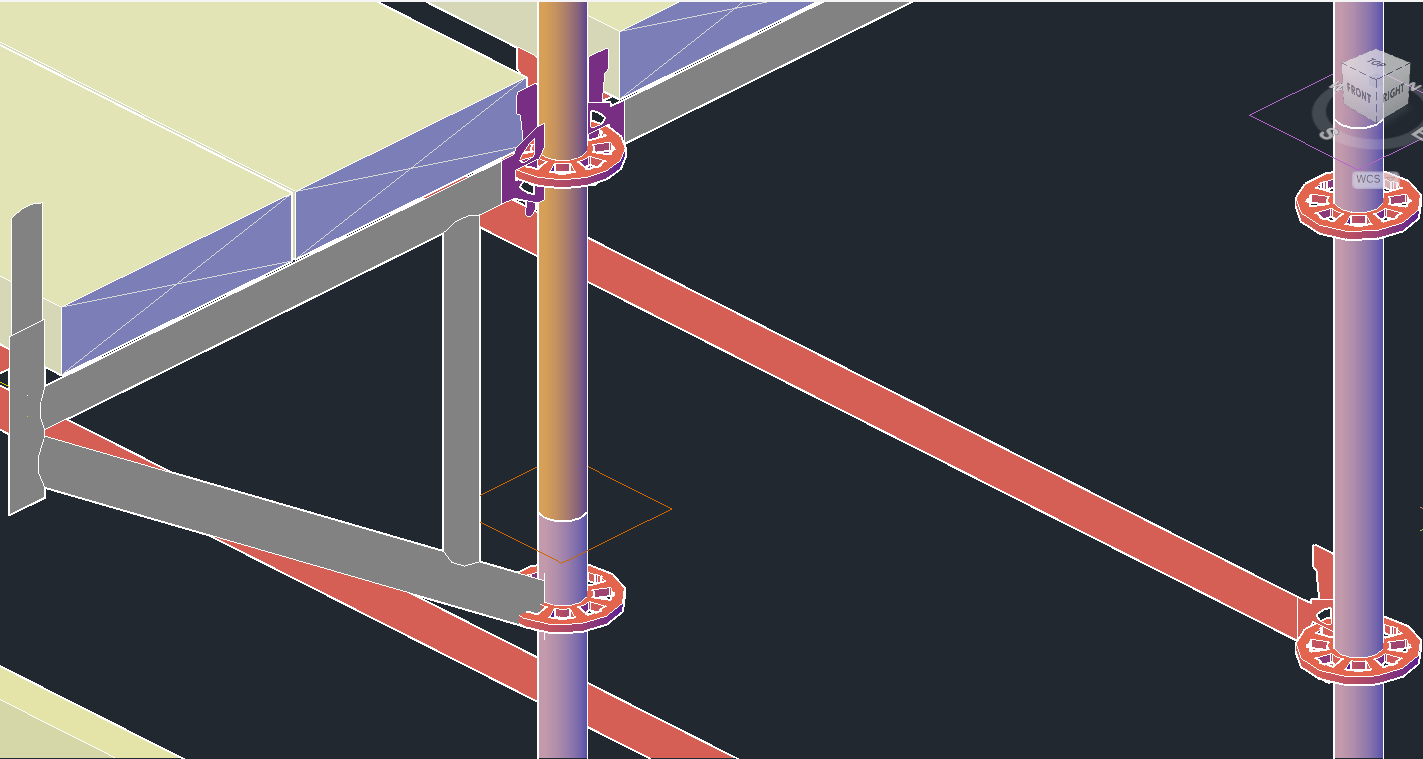
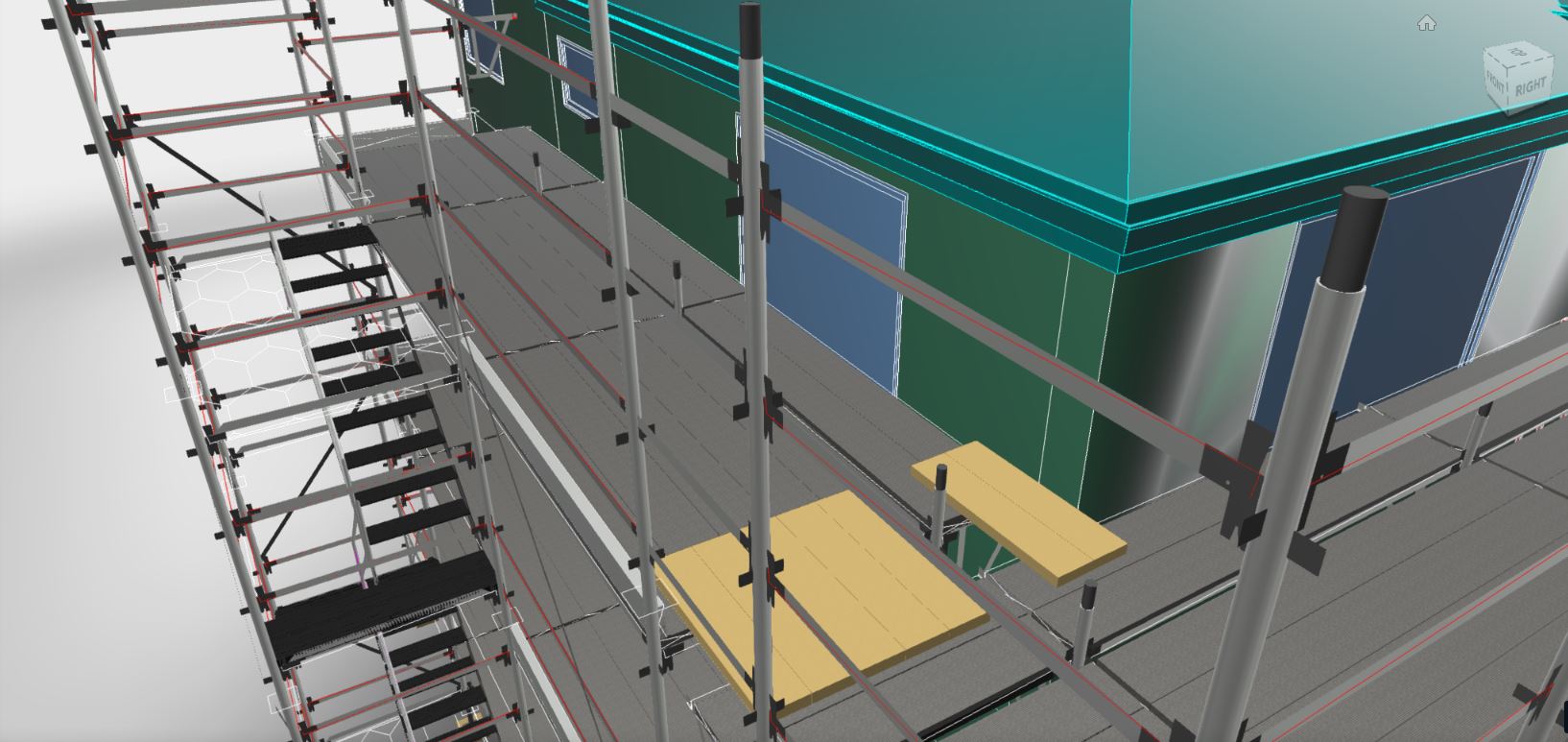
What you see is what you get. Every single component is counted based on the scaffold that you use. With our experience in the industry, we know how most scaffold systems are constructed. All the different dimensions for the ladder towers and stair units are built the way you would build them right down to the stair stringers, stair treads, platforms, trap doors, landings and handrails. We also understand that every scaffold business does things a little differently to their neighbour, so please talk to us about your specific needs.
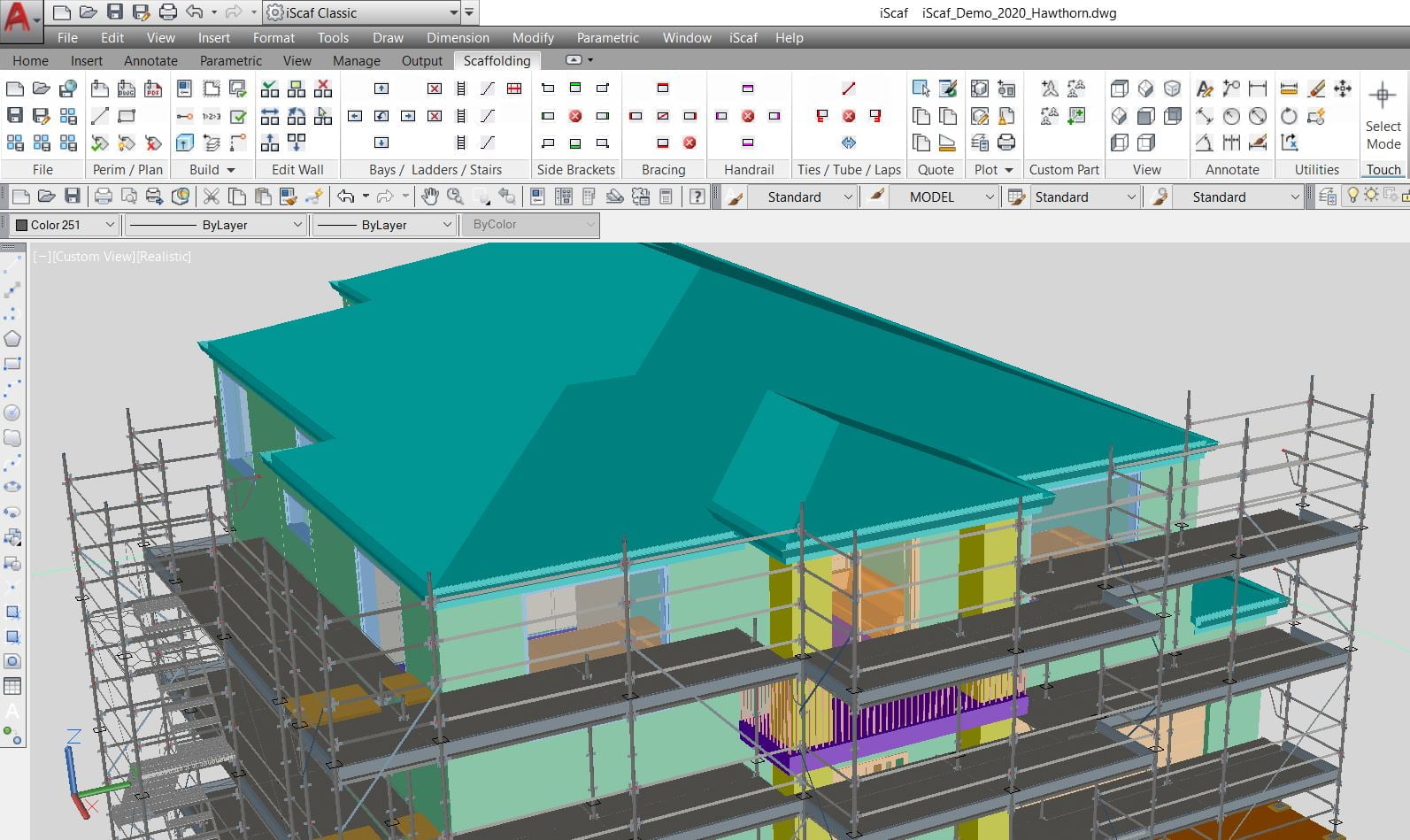
What Scaffold Systems does iScaf® support? iScaf® can handle a number of scaffold systems such as the main ones including Ringlock, Layher, Cuplock, Kwikstage and Frame. Almost any scaffold system can be supported with iScaf®. The iScaf®“Modules” system allows Scaffolding Software to create variations and customisations within each module since we understand that different businesses can have variations in the way their scaffold is built. This gives iScaf® very good flexibility.
Please Click Here to view a more comprehensive list of iScaf® scaffold modules.
iScaf® will NOT handle scaffolds built entirely out of tube and clamp.

With the use of additional cloud based tools by Autodesk®, iScaf® drawings can be shared to mobile, iOS, Android, PC and MAC devices. Your employees and clients can view iScaf® drawings anywhere with the multi-platform viewer. If more power is needed with annotation and mark-up, then the Autodesk® APP can be used with the iScaf® Drawings.
iScaf® Drawings and the accompanying material list quote can be converted easily to a custom PDF or exported to a variety of formats.
Please visit the Scaffolding Software YouTube Channel for more information and tutorials in relation to viewing and sharing iScaf® drawings.
Please note that since January 2014, all our products use an activation system for license control. We no longer use the dongle or hardware lock type system. This has been very well received and we will continue this approach. If your business still uses the old hardware lock system, we will still provide support but we recommend that you upgrade.

Minimum System Requirements
| Operating System | Microsoft Windows 11 x64 edition version 21H2 or above. Note Windows x32 editions are NOT supported |
| CPU Type | Basic: 2.5-2.9 GHz processor with 8 logical cores (base) ARM Processors are not supported. Recommended: 3+ GHz processor (base), 4+ GHz (turbo) Intel options: i5/i7 7000+ series AMD options: Ryzen 3000+ series |
| Memory | 16 GB (32 GB or greater highly recommended) |
| Display Resolution | Conventional Displays: 1920 x 1080 with True Color (24 bit/16 Million Colour mode) Display (with capable display card) High Resolution & 4K Displays: Resolutions up to 3840 x 2160 supported on Windows 10/11, 64-bit systems, (with capable display card). Display Scaling suggested to be limited to 150% max, suggest 125% or 100%. |
| Display Card | Basic: 2 GB GPU with 29 GB/s Bandwidth and DirectX 11 compliant Highly Recommended: 8 GB GPU with 106 GB/s Bandwidth and DirectX 12 compliantDirectX 12 with Feature Level 12_0 is required for Shaded (Fast), Shaded with edges (Fast), and Wireframe (Fast) visual styles. Please be sure to use the latest drivers from the video card manufacturer’s website.Note: iScaf uses your computer’s display card for a variety of essential graphics operations including but not limited to view manipulation, line smoothing, and text/linetype generation. It is recommended that you have a display card with dedicated VRAM to support these operations at optimal speeds. |
| Disk Space | 20.0 GB (suggested SSD) |
| Pointing Device | MS-Mouse compliant device with wheel and wheel/3rd button |
| Browser | Microsoft Edge / Mozilla Firefox / Google Chrome |
| .NET Framework | .NET 8 |
Regarding Windows 10 Support: If a vendor discontinues support for an operating system, we will also discontinue support for our software running on that operating system, even if it is among the eligible previous versions. iScaf Build 5235+ will be Windows 11 only.
In Islam, Allah is known by 99 beautiful names (Arabic: Asma’ul Husna, meaning “The Most Beautiful Names”). These names describe His attributes—such as mercy, power, wisdom, and justice. Memorizing, understanding, and invoking these names is considered a profound act of worship, with specific spiritual and practical benefits for believers.
The Qur’an states:
“And to Allah belong the best names, so invoke Him by them…” (Qur’an, 7:180)
The Prophet Muhammad (peace be upon him) said:
“Allah has ninety-nine names, one hundred less one. Whoever counts (understands, memorizes, and acts upon) them will enter Paradise.” (Sahih al-Bukhari)
Benefit: Salvation and eternal reward.
Al-Jabbar means "The One who mends broken things." Reciting this name helps people suffering from trauma or low self-esteem. The link is that when you acknowledge Allah as the Jabbar, you realize your brokenness is temporary and fixable.
Knowing the list is useless without action. To benefit from the Allah 99 Names and benefits link, follow these three steps:
Reciting certain names is linked to protection from harm, anxiety, and spiritual ailments.
The link between Allah’s 99 Names and their benefits is not broken. It is a golden chain that connects your human weakness to Divine perfection.
Memorize the names. Understand the meanings. Call upon Allah by them. Act on their lessons.
If you do this, the benefits will flood your life: inner peace (As-Salam), provision (Ar-Razzaq), healing (Ash-Shafi), and ultimately, the greatest benefit of all—entering Paradise through the door of gratitude.
Start today. Learn one name. Live one attribute. And watch the link transform your soul.
Did you find this guide on the Allah 99 Names and benefits link helpful? Save this article and share it with your family. Begin your journey of 99 days, one name per day, and witness the change.
SEO Keywords: Allah 99 names and benefits link, Asma ul Husna benefits, Ya Razzaq benefits, Ya Shafi meaning, spiritual healing in Islam, names of Allah for anxiety.
Learning and reciting the 99 Names of , known as Asma-ul-Husna
, is a central practice in Islam for building a deeper connection with the Creator. Below is a categorized list of these names, their meanings, and the spiritual benefits of reflecting on them. Core Benefits of Reciting the 99 Names Entry to Jannah (Paradise)
: According to a well-known Sahih Bukhari Hadith, "Allah has ninety-nine names... whoever knows them will go to Paradise". Spiritual Tranquility
: Reciting these names can bring immense comfort, calm, and inner peace during times of hardship or anxiety. Powerful Supplication (Dua) : Using specific names related to your needs (e.g., asking
for provision) makes your prayers more sincere and targeted. Self-Development : Reflecting on attributes like
(The Forbearing) encourages believers to adopt similar virtues, such as patience and mercy, in their own lives. A Selection of Names & Their Meanings Arabic Name Spiritual Focus The Beneficent Mercy for all creatures. The Merciful Specifically for those who believe. The Sovereign Absolute authority over the universe. The Source of Peace Freedom from defects and provider of peace. Al-Ghaffar The Great Forgiver Forgiveness for repeated sins. The Provider The sustainer of all living things. The All-Knowing Infinite knowledge of everything. The Subtle One Kindness and gentleness toward His servants. The Loving One Boundless love for His creation. The Opener The solver of problems and opener of doors. Recommended Resources
For a complete list of all 99 names with detailed audio and "wazaif" (specific recitation counts), these platforms provide extensive guides: 7 Things you need to know about Allah's names
99 Names of Allah , known as Asma-ul-Husna (The Most Beautiful Names), are attributes that describe the infinite qualities of the Creator. According to Islamic tradition, understanding and internalizing these names is a key pathway to spiritual growth and divine reward. Tarteel AI Core Benefits and Significance Promise of Paradise
: A well-known Hadith states that anyone who memorizes and "perceives" these 99 names will enter Paradise ( Sahih al-Bukhari Deepened Faith
: Regularly reflecting on these names helps a person understand Allah's nature, leading to increased piety and a stronger personal relationship with Him. Inner Peace and Protection allah 99 names and benefits link
: Reciting specific names can bring comfort during hardships. For example, Al-Muhaymin is recognized as The Protector, while represents The Total Provider. Character Development : Contemplating attributes like "The Most Merciful" ( ) or "The Forbearing" (
) inspires individuals to embody these virtues in their own lives. Learning and Recitation Resources
To study the full list of names along with their specific meanings and individual benefits, you can explore these comprehensive guides: Complete List & Meanings My Islam 99 Names Guide
provides a detailed breakdown of each name, including Arabic script, transliteration, and spiritual significance. Memorization Tips : For those looking to learn them by heart, Al Jumuah Magazine
suggests repetitive listening and writing as effective techniques. Scholarly Context
: For deeper theological insights into the rewards of recitation, resources from Dar al-Ifta al-Misriyyah explain the religious rulings and benefits. دار الإفتاء المصرية summarized list
of specific names categorized by their meanings, such as names of or names of
Benefits of Reciting the 99 Names of Allah (Asma-ul-Husna ... - Facebook
The 99 Names of Allah: Unlocking the Divine Benefits
In Islamic tradition, Allah is believed to have 99 names, also known as Asma'ul-Husna, which translate to "the most beautiful names." These names are considered to be a key to unlocking the divine benefits and attributes of Allah. Muslims believe that by understanding and reflecting on these names, one can develop a deeper connection with Allah and experience spiritual growth.
The Significance of the 99 Names
The 99 names of Allah are mentioned in the Quran and Hadith, and are considered to be a way to invoke and experience the divine presence. Each name is believed to possess unique benefits and attributes, which can be applied to various aspects of life. The names are often recited and reflected upon by Muslims, particularly during daily prayers and devotional practices.
The 99 Names Categorized
The 99 names of Allah can be categorized into several groups, including:
Benefits of Reciting the 99 Names
Reciting and reflecting on the 99 names of Allah is believed to have numerous benefits, including:
Some of the Most Powerful Names
Some of the most powerful and widely recited names of Allah include:
Conclusion
The 99 names of Allah offer a profound way to connect with the divine and experience spiritual growth. By understanding and reflecting on these names, Muslims can tap into the divine benefits and attributes, leading to a more meaningful and fulfilling life. Whether recited during daily prayers or reflected upon in quiet contemplation, the 99 names of Allah have the power to transform and uplift the soul.
References
Link to resources:
For those interested in learning more about the 99 names of Allah, here are some recommended resources:
Exploring the 99 Names of Allah ( Asma-ul-Husna ) is a powerful way to deepen your spiritual connection and call upon the specific attributes of the Creator for your daily needs. Spiritual Foundations In Islam, Allah is known by 99 beautiful
The Prophet Muhammad (peace be upon him) stated that whoever learns, believes in, and acts upon these names will enter Paradise. Each name acts as a "doorway" to understanding Allah’s perfection. Names & Spiritual Benefits Spiritual Benefit (The Most Merciful)
Reciting 100 times after each prayer can improve memory and ease a heavy heart. (The Giver of Peace)
Frequently reciting this name is believed to bring tranquility and protection from calamities. Al-Mu’min (The Infuser of Faith)
Reciting this 630 times during times of fear can help grant a sense of safety and security. (The Mighty)
Reciting 41 times daily for 40 days can help one gain honor and self-sufficiency. (The Opener)
Reciting 70 times after Fajr while placing hands on the chest is said to illuminate the heart with faith. (The Wise)
Continuous recitation is believed to open doors to knowledge and wisdom while easing work difficulties. (The Most Loving)
Often used in prayers to resolve disputes and strengthen bonds between loved ones. (The Patient)
Reciting this name during periods of severe difficulty or sorrow is said to help bring rescue and relief. Practical Resources For a comprehensive guide, you can refer to the 99 Names of Allah Meaning and Benefits list provided by . Another excellent reference is IslamiCity's Divine Names , which offers detailed translations for each attribute. specific life situation , such as seeking health or financial ease? 99 Names of Allah: Meanings & Benefits | PDF - Scribd
Don't just scroll through the list. Pick one name a week. Write it down. Stick it on your mirror. Make it your personal Wird (litany) for seven days. Watch how your perspective shifts when you focus on a specific attribute of the Divine.
"And to Allah belong the best names, so invoke Him by them." — (Quran 7:180)
The 99 Names of Allah, known as Al-Asma-ul-Husna (The Most Beautiful Names), are the divine attributes by which Allah reveals Himself in the Quran and Islamic tradition. Learning and reciting these names is considered a fundamental act of worship with significant spiritual and practical rewards. 99 Names of Allah Core Benefits and Spiritual Rewards Promise of Paradise
: The Prophet Muhammad ﷺ stated that anyone who "encompasses" ( iḥṣā’ ) these 99 names will enter Paradise. Scholars define iḥṣā’
as memorizing them, understanding their meanings, and calling upon Allah through them. Effective Supplication (Dua)
: Using specific names related to your needs makes prayers more focused and sincere. For example, calling upon Al-Ghaffar (The Forgiving) when seeking repentance or (The Provider) when seeking sustenance. Peace and Tranquility
: Regular recitation is believed to cleanse the heart, reduce anxiety, and bring inner peace during difficult times. Strengthened Faith (Iman)
: Deeply understanding these attributes builds a more profound connection and awareness ( ) of the Creator. Example Names and Their Specific Benefits
Many scholarly traditions and classical texts associate specific benefits with the repeated recitation of certain names: Asma-ul-Husna: 99 Names of Allah - Facebook
The 99 Names of Allah: A Comprehensive Guide to Their Benefits and Significance
In Islam, Allah is considered the one and only God, and Muslims are encouraged to learn and reflect on His attributes and qualities. One way to do this is by exploring the 99 Names of Allah, also known as Asma'ul Husna. These names are considered to be the most beautiful and comprehensive names of Allah, and they hold significant benefits for those who learn and reflect on them.
What are the 99 Names of Allah?
The 99 Names of Allah are a collection of names that describe the attributes, qualities, and characteristics of Allah. These names are derived from the Quran and Hadith, and they are considered to be a way to connect with Allah and understand His nature. The names are often recited and reflected upon by Muslims, and they are believed to bring spiritual growth, guidance, and blessings.
Benefits of Learning the 99 Names of Allah
Learning the 99 Names of Allah has numerous benefits, including: “And to Allah belong the best names, so
The 99 Names of Allah and Their Benefits
Here is a list of the 99 Names of Allah, along with their benefits and significance:
...and so on.
Link to Learn More
To learn more about the 99 Names of Allah and their benefits, you can visit the following resources:
Conclusion
The 99 Names of Allah are a powerful tool for spiritual growth, guidance, and blessings. By learning and reflecting on these names, Muslims can deepen their understanding of God's nature and attributes, and they can experience the benefits of increased faith, protection, and healing. We hope that this write-up has provided a comprehensive guide to the 99 Names of Allah and their benefits, and we encourage you to explore these resources further.
Promise of Paradise: A well-known Hadith states that whoever memorizes, understands, and acts upon these 99 names will enter Paradise.
Strengthened Connection: Reciting and reflecting on these names helps believers know their Creator better and deepens their spiritual bond.
Guidance in Supplication (Dua): The Quran (7:180) instructs believers to call upon Allah using His beautiful names, allowing for more specific and sincere prayers based on the attribute being invoked (e.g., asking for mercy using Ar-Rahman).
Mental and Spiritual Peace: Recitation is often used as a form of dhikr (remembrance) to bring tranquility, ease anxieties, and provide comfort during hardships.
Character Development: By contemplating attributes like Al-Haleem (The Forbearing) or Al-Kareem (The Generous), Muslims are encouraged to model these positive traits in their own lives. Specific Spiritual Benefits (Common Traditions)
While scholars emphasize understanding the meanings over rote repetition, many traditional sources suggest benefits for specific names:
Al Asma Ul Husna – The 99 Beautiful Names of Allah A ... - Facebook
I collected this information from goolge so that everyone can understand clearly. "Narrated Abu Huraira: Hazrat Muhammad (P.B.U.H)
Facebook·Shah Rasool Memorial Welkin Educational Trust Sopore -School Page 99 Names of Allah with Meaning And Benefits - My Islam
The 99 Names of Allah, known as Asma-ul-Husna, represent the infinite attributes and divine nature of the Creator. In Islamic tradition, these names are more than just titles; they are keys to spiritual growth, emotional healing, and a deeper connection with the Divine. By understanding and reciting these names, believers find a roadmap for navigating life's challenges with faith and purpose.
The significance of these names is rooted in the Quran and the Sunnah. The Prophet Muhammad (peace be upon him) said, "To Allah belong ninety-nine names, one hundred less one; whoever learns them by heart will enter Paradise." This suggests that "learning" goes beyond simple memorization; it involves internalizing the meaning of each name and reflecting those divine qualities, such as mercy and justice, within one’s own life.
Each name serves a unique spiritual purpose. Ar-Rahman (The Most Merciful) and Ar-Rahim (The Especially Merciful) are the most frequently recited, reminding the faithful that God’s compassion precedes His wrath. For those seeking peace in a chaotic world, invoking As-Salam (The Giver of Peace) can provide immense mental and spiritual relief. Meanwhile, Al-Razzaq (The Provider) is often recited by those seeking stability and sustenance in their worldly affairs.
Practicing the recitation of Asma-ul-Husna offers numerous psychological and spiritual benefits. It acts as a form of mindfulness, centering the heart on a higher power and reducing the anxieties of daily life. Many scholars suggest that meditating on specific names can help overcome personal flaws; for instance, reflecting on Al-Haleem (The Forbearing) can help an individual manage anger and cultivate patience.
For those looking to integrate these names into their daily routine, many resources provide a comprehensive "allah 99 names and benefits link" to assist in study. These digital guides often include the Arabic script, transliteration for easier pronunciation, and detailed explanations of the spiritual rewards associated with each attribute. Utilizing these links allows for a structured approach to dhikr (remembrance), making the profound wisdom of the Asma-ul-Husna accessible to everyone, regardless of their level of Arabic proficiency.
Ultimately, the 99 Names of Allah serve as a bridge between the finite human experience and the infinite presence of God. By dedicating time to study these attributes, one does not just learn about God, but learns how to live a life aligned with divine light, mercy, and truth.
Here’s a concise, informative review of the 99 names of Allah (Asma’ul Husna) and their commonly cited benefits, along with guidance on reliable sources.